
Hello friends! Today I’d like to take a sec to lay out a few glorious options for global travel and adventure that include the ability to earn money along the way.
This article is primarily written with young people in mind, but the information within is useful for all ages. The only limiting restriction is the Working Holiday Visa program, which is only available to youth between the ages of 18 and 30 years old (sometimes 35 years old, if you’re Canadian and depending on the country).
However, people of all ages can teach English abroad, do volunteer farm work in exchange for room and board, and work in any of the many adventure jobs offering housing and meals along with pay in adventurous locations here in the US (if you’re a US citizen), as well as in Canada (if you’re a Canadian citizen or have a Working Holiday Visa).
Let me start by saying that I’m an American and that I’m primarily writing this information for American eyes and ears. I’m also including information for our Canadian neighbors. If you’re from another country, there are many options for your own travel and working adventures. And a lot of the information in this article will be useful to you as well.
For instance, the Teaching English section is applicable to people from all English speaking countries. And the Working Holiday Visa program is applicable to youth from all over the world (each nationality has its own opportunities and agreements with other nations). And volunteer organic farm work-trade is available for people of all ages all over the world, so long as you’re able to get a tourist visa for that country.
I did not know about the following opportunities when I was 18 years old. I learned about them a few years into my 20s, and I have taught English abroad, tended bar in the Caribbean, worked in adventure jobs in Maine, Arizona, Colorado, Washington, and Hawaii, and worked as a volunteer organic farm worker on a beautiful island in the Puget Sound. All thanks to the information I’m about to share with you.
So bookmark this post, and get on with your own adventure.
With the following information, you’ll be able to:
1. Work in the US in remote beautiful locations, such as National Parks or remote lodges in Alaska, while earning money, enjoying free or very cheap rent and food, and saving tons of money
2. Travel abroad and work and live in several countries for up to a year through the Working Holiday Visa program
3. Get certified to teach English as a second language within a month and get work and housing in several countries.
4. Learn about how to volunteer on organic farms all over the world in exchange for free housing and meals
As an 18 year-old just leaving the home for the first time, one thing usually connects you with other 18 year-olds: you’re broke and have very little if any savings. It’s normal.
So how can you take a year or so to travel and earn a living before going off to college and deciding what you’ll want to do with the rest of your life? Wouldn’t it be best to take a break from school? After all, you’ve just spent 13 straight years in school with only summer breaks. You’ve earned some time to see the world and enjoy your life. Why not let the magical experience of other cultures and different people and places shape your perspective as you come to know who you are and what you’d really like to focus on in your life as a career.
It’s traditional in many countries for young people graduating high school to take a year or two off before attending University. This is called ‘a gap year.’
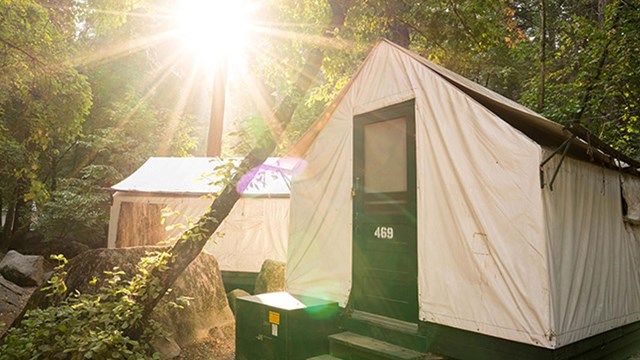
Adventure Jobs with Housing and Meals Provided:
Coolworks.com is a beautiful website where lodges, campgrounds, hotels, resorts, National Parks, and several other companies list their adventure jobs. Many of these jobs offer free or very inexpensive housing and meals (deducted from your paycheck, so no need to arrive with a boatload of money).
These types of jobs are seasonal and require anywhere from 4 to 5 months of your work in summers or winters.
Due to the fact that rent and meals are either free or highly discounted, saving a ton of money in a short season of work is completely possible. As an example, I once worked a summer job I found through Coolworks.com in Maine near Acadia National Park and saved enough to spend 3 months traveling through Central America and Costa Rica afterward. Anyone can do this. My only advice is to save every penny because savings equals freedom.
Once you’ve got a bit of a bankroll saved, it’s now possible to think bigger and adventure outside of your home country. This is where the Working Holiday Visa comes in.
Working Holiday Visa
The Working Holiday Visa program was set up through an agreement between several countries in order to support global travel and cultural education in youth. If you’re between 18 and 30 (in some cases 35), you’re eligible to go abroad for up to a year and work any job you can get while living in and exploring that country.
I had a friend who did this in New Zealand. Here’s exactly what he did.
He went to the official New Zealand government site: https://www.immigration.govt.nz/new-zealand-visas/visas/visa/united-states-of-america-working-holiday-visa. He applied for the visa online and payed the $400 charge. Within 10 days he got the visa, which granted him a year of living and working in New Zealand. (The visa doesn’t activate and start the entry time until you arrive in New Zealand.) He then flew to New Zealand with enough savings to see him through initially, bought a $1200 used camper van, found odd seasonal jobs picking fruit at https://www.backpackerboard.co.nz/work_jobs/job_listings.php and was paid upwards of $25NZ per hour working a few weeks to a month or two here and there, while taking time off in between gigs to adventure throughout New Zealand.

Many of the jobs offer accommodation, particularly the fruit-picking and farm work. There are fruit picking seasons spread out throughout the year all around the two main islands of New Zealand, and you can plan your trip accordingly. There are also many jobs in hospitality, such as working the front desk at a travelers hostile in Aukland.
The coolest part? Americans are able to enjoy the Working Holiday Visa in New Zealand, Australia, Ireland, Singapore, South Korea, and Canada. This means you can live and work for up to a year in New Zealand, and then spend the next year in Australia, and the next in South Korea, etc. You’ll simply apply for a new WHV for each country you wish to explore.
Canadians have access to even more countries. Here’s a link to a site that lists all 32 countries, along with their age requirements and length of stays: https://www.anyworkanywhere.com/working-holiday-visa-origin/canada/.
…Just a quick sec to emphasize that global travel is beneficial for both yourself and the people you meet while traveling. It’s important to be kind and deep and caring, and it’s so much more easier to be this way when expanding one’s horizons and life-experiences. People will love you wherever you go, and you’ll love them. Very reciprocal. If there were mandatory year-abroad programs in every country, there would be something far closer to world-peace…

Teaching English Abroad
The TEFL certification course is a 4 week course that teaches you the basics of using your already present skill as a means of earning a living. What is your already present skill? Knowing, speaking, writing, and reading the English language.
That’s right, the very language you use daily without effort is a very sought-after commodity in nearly every single country in the world. And the coolest part is that it only takes a month to get certified as a teacher. That’s not bad, for something that provides so much financial and travel freedom.
It is a lot better to have a 4 year degree in any major under your belt in order to teach English in other countries, and many countries require this. But many do not, and some are in a gray area.
Would you believe that I taught English in my early 20s in Europe for a year without a degree and without the TEFL certification? Well it’s true.
Having said that, it’s far better to take the TEFL course and learn the skills the course teaches you in order to be a great English as a Second Language (ESL) teacher. I learned on the job, which isn’t a bad thing, but it would have been preferable to have had the TEFL certificate.
The certificate will make you a more appealing hire. And a four-year degree and a certificate will make you the most appealing hire.
However, getting a job teaching English in Thailand, Turkey, Vietnam, Indonesia, Cambodia, and many other countries is easy and can be done without either a degree or a certificate. If the school you work for can’t get you a work visa, you can do visa runs. This is something that established teachers may look down upon. But a ton of people live and work in a country like Thailand on a tourist visa for 90 days, and then do a border run, stay a night in Vietnam, and then cross back into Thailand for another 90 day visa stamp.
I did this for a year, and so did many of the teachers that worked in my English school.
The point is, you’re not limited. And a lot of teachers teach English privately to private students one on one and set their own rates. You can also do conversational English. One friend from England would offer conversational English lessons to students one and one. The student would meet him in a cafe or a bar and simply chat with him and practice speaking English. Most of his students would insist on buying his coffee or a beer.
I’ve never worked at a school that taught children. Every school I’ve worked for consisted of adults learning English for varying reasons, predominantly business usage. I even taught at an actual manufacturing company where each week I’d meet in the boardroom with the top executives running the company and we would progress through the curriculum of their intermediate English course. And the best part is that I became good friends with many of my students.
Most schools will provide housing or help set you up with housing. Most schools have great medical benefits and paid vacation as well.
Teachers are revered in most other countries in a way that I’ve noticed doesn’t exist so much here in the US. Teachers in places like Vietnam or Turkey are given gifts by students and taken out to dinner as a means of showing appreciation and respect. It’s also a great way to learn more about the culture you’re living and working within. Students become the teachers, and the teacher becomes the student.

What you’ll need:
-a TEFL certificate (usually it’s a 4 week 120 hour course that can be taken in person or online)
-a job search (just go to https://www.eslcafe.com and look at their job board)
Eslcafe.com is ran by Dave, and the site used to be called Daveseslcafe.com. I was finding jobs on this site way back in 2003, so it’s been around a very long time. The forums are filled with teachers who have worked at every school around the world. This is where you can ask questions and the teachers rate the places they’ve worked at and tell you how to prepare to live and work in the varying countries.
Most important thing to remember when getting your TEFL and job searching:
- Make sure the TEFL program is accredited. Do your research and see what other teachers have said about the program. You can take the TEFL all over the world, which means you can spend a month in Thailand or several European countries while attending the course. Or you can save money by doing the course online.
- Be sure and vet the company or school you are looking into working for. Check out the forums in https://www.eslcafe.com and see what other teachers are saying about working there. Always be very clear on the terms and expectations the job requires
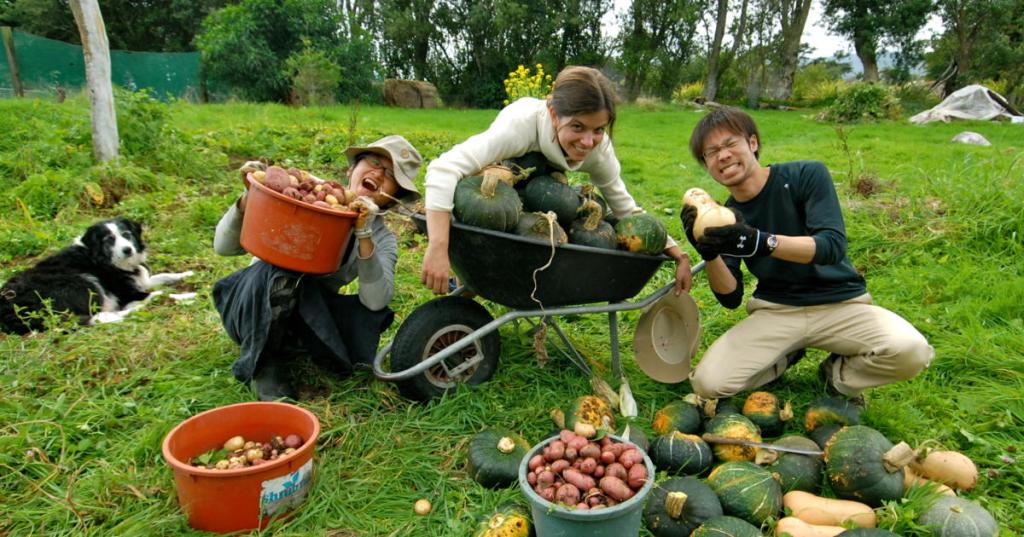
WWOOF: World Wide Opportunities on Organic Farms
Finally, there’s the WWOOF program, which is a work-trade program where volunteers of all ages exchange their labor working on organic farms for free room and board.
How it works:
-Organic farms around the world join the WWOOF site for registering their farm as a ‘host farm’ within the country they reside. They list the terms of what they are offering and what they require. For example: “We are a blueberry farm, and we require fruit planting, watering, fruit-harvesting, and prep-work for the weekly farmers market. We require 5 hours a day of work, 5 days a week. In exchange, we offer your own room for free and 3 free organic meals a day.” The hosts are also required to provide you meals on your days off, so you can literally live and work in any place around the world for free.
-Each country has their own WWOOF site, which means you’ll have to pay to join each country’s WWOOF program. So if you know you want to work in New Zealand, you’ll pay $40 for the 12 to 18 month membership, which grants you access to all host listings in New Zealand. (Note: due to the Covid pandemic, the New Zealand WWOOF membership is currently discounted to $25 because of the difficulty in finding enough workers at the moment)
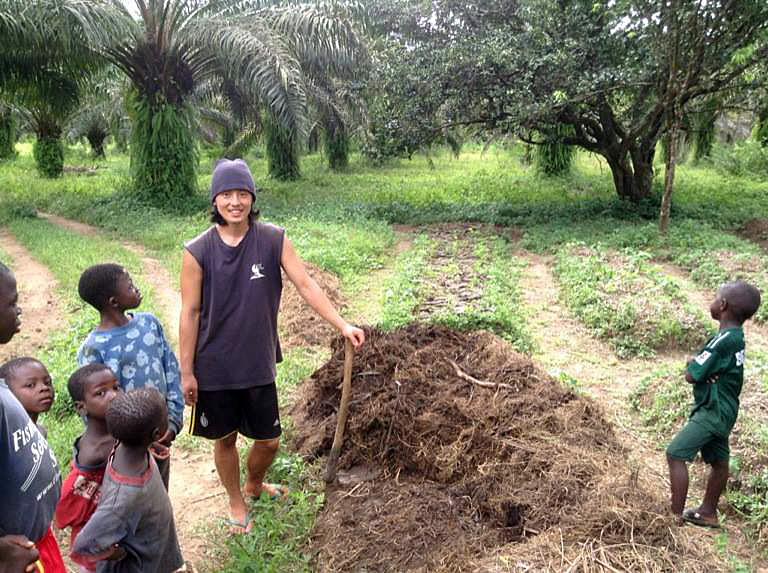
-Once you sign up, you’ll find a listing that looks right for you and you’ll contact the host and tell them about yourself. This is your opportunity to ask questions to make sure that both you and the host are clear about the work and living expectations. Since this is a work-trade, and not actual employment, you should never be required to work more than 20 to 25 hours per week. Some farms may require 30 hours, and it’s up to you if that sounds fair. If you feel that’s too many hours, you can let them know that the majority of farms only require 25 hours at most for a fair work-trade such as this, and that you’d like to know if that can be the case with this farm. Some hosts might be new and not aware of what is considered fair in hour requirements, so you can negotiate and patiently let them know these things. If they agree, great. If not, there are plenty of other options for you to find a fair situation that works for you.
Remember, you’re not getting paid, and you are exchanging your labor for a place to sleep and free meals. So fairness for both host and volunteer is the name of the game. Clarity of terms for both parties is both the responsibility of the host and the volunteer. So make sure you and your host are absolutely clear on the terms and requirements and expectations you both have before you both make a finalized agreement.
-You’ll be making a time commitment: 2 weeks, a month, 3 months, etc. Often times a traveler will work WWOOF gigs for portions of their travels throughout a certain country, allowing them to save money and to live and work in a country and gain the experience of another culture that is unique and more experientially educational. Plus you get to work alongside other WWOOF volunteers from countries all over the world. It’s really a joyful opportunity.
https://wwoof.net is the place to find the legit links for each country’s WWOOF program website. Just go to the site and scroll down to the country you wish to live and work in, and click the link. Once you pay for the year-long membership, you’ll have full access to each host farm listed. There are lots, btw. In fact, in the US there are over 2000 organic host farms offering work-trade.
There are no age limits. You can be 18 to 80 years old, so long as you are fit enough to do the labor required.
One thing to keep in mind is that when you travel abroad, you’ll be doing so on a tourist visa. This means that you will not be there for employment. So if asked by any government agencies what you’re doing there, the answer will always be ‘adventurous tourism.’ These customs and border people usually do not understand or have knowledge of WWOOF, and they may mistake it as ‘employment,’ if you tell them you are there to work on a farm. So keep that information to yourself, and simply let them know you’re on holiday.
Last thing about WWOOF: Often times farms will have opportunities to earn a bit of money, once you’ve worked your full 20 or 25 hours for the week. There’s nothing wrong with earning a little money. When I worked on a small organic farm in the Pacific Northwest, the neighboring farms offered us WWOOFers paid work in our free time, and it was a great chance to make a little extra spending cash.
However, it’s important to remember that actual employment in another country requires a work visa, so you’ll most likely not be able to get full-time work. A couple hours of paid work here and there on a farm isn’t going to cause any issues.
So that’s it. You now have 4 wonderful options for an adventurous life.

Example of how to make use of the above information might go something like this:
It’s February or March and I’m 18 years old, just about to graduate high school. I go to Coolworks.com and find a job working at a remote lodge in Alaska starting early June and going until mid-September. They offer free meals and housing, allowing me to save $5000, plus they give me a $1000 bonus for completing the season.
A few months before the season ends, I’ve already applied for and gotten my Working Holiday Visa for New Zealand. I fly directly there from Alaska and go right to the fruit picking job I found at https://www.backpackerboard.co.nz where they give me free housing and $25NZ per hour to pick kiwi fruits for a month. I then spend the next month and a half traveling all over New Zealand, hiking, kayaking, staying in affordable hostels and meeting other cool travelers from all over the world.
After that, I take another job for a month or two and try to save as much as possible. Once that commitment is over, I spend another month traveling around New Zealand.
By the time my year in New Zealand is coming to an end, I sit and decide my next steps. Will I go to Australia on the Australian Working Holiday Visa and live and work there for a year, or will I take my savings and get the WWOOF membership for Japan and go to Japan and do organic farm work-trade for 2 months, and then spend a month traveling Japan before flying to Ireland to do farm work-trade there for a couple months?
Decisions decisions.
I know! I’ll go to the Czech Republic in Europe to take the TEFL certification course, so that I can teach English abroad and earn a living.
I fly to Europe, spend a month traveling by train throughout the European Union, then end up in Czech Republic for the start of my one month course. Once my course is finished, I go to https://www.eslcafe.com and check out the international job board to see which country I’d like to work in for the next 6 months to a year as an English teacher. I decide to go to Taiwan, where I meet the love of my life, who then decides to join me on the next leg of my continuing adventures.
Wow, what a life!
 Slow-Goer
Leave a comment